
Writing & research
Watching for the signals of Lachish
Around 2,600 years ago, someone wrote a Hebrew message on a piece of pottery. One line about distant signals still leaves readers with a question.
In this article
A letter written on pottery
The object in the photograph below is a piece of broken pottery with a Hebrew letter written on it in ink. Archaeologists call a fragment like this an ostracon. This one is known as Lachish Letter 4, after the ancient city where excavators found it. Lachish stood in the kingdom of Judah, southwest of Jerusalem, and the letter belongs to the early sixth century BCE, around 2,600 years ago. [1]
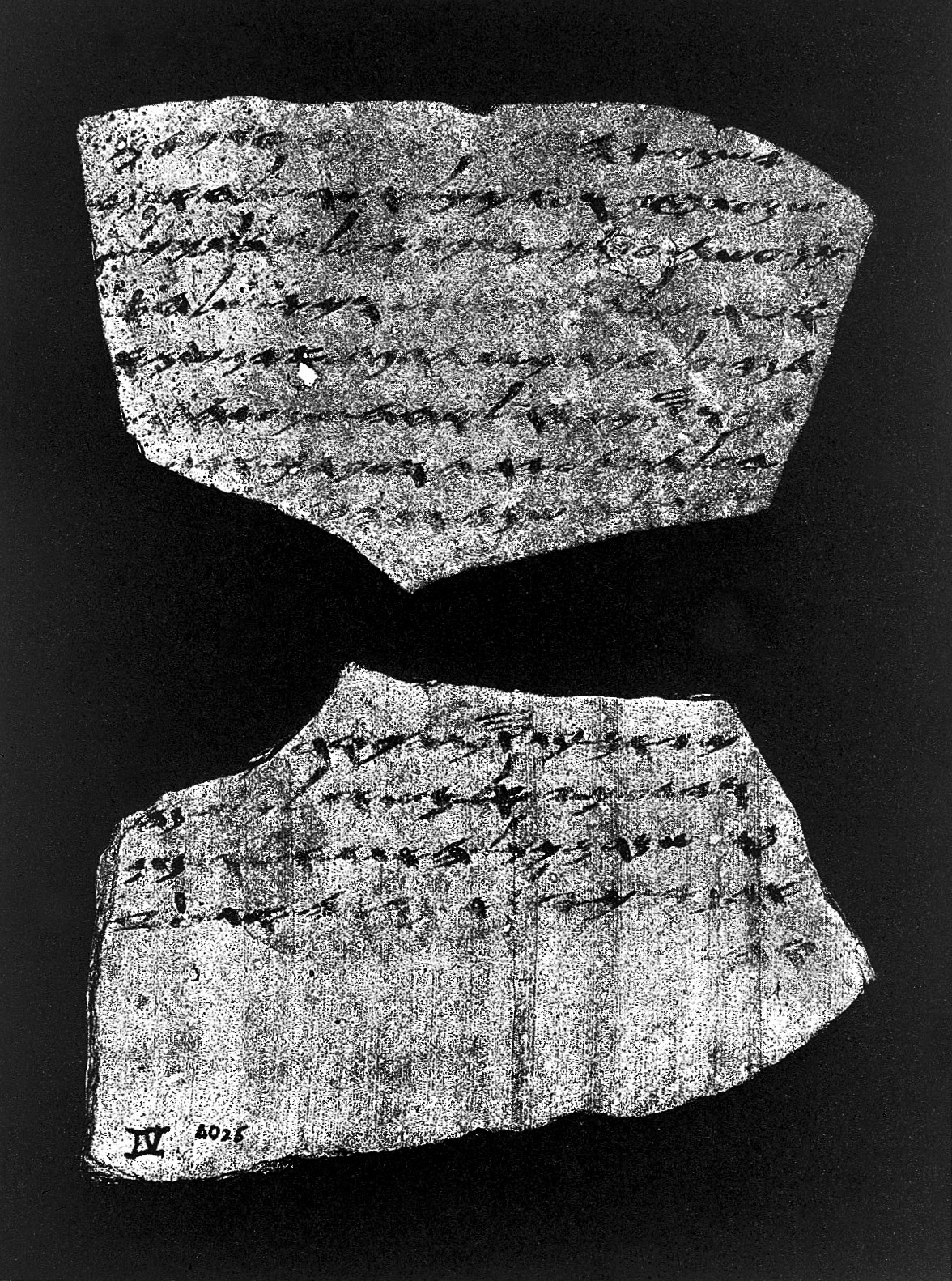
The writer reports on orders and other business, then mentions watching for signals from Lachish and being unable to see Azekah, another fortified town in Judah. Scholars have long debated that last part. Had an enemy captured Azekah, or did the hills simply block the writer's view? The difference matters: one reading suggests an urgent report of a town's fall; the other describes how people passed messages across the landscape. [3]
That was the question that caught my attention. I first read the line as bad news, especially with the Babylonian conquest of Judah in the background. Then I opened Ze'ev B. Begin's paper and found a map. It made me wonder where the writer was standing and what he could actually see. To follow his argument, I had to go back to the letter and the place where excavators found it.
Try the inscription
Lachish Letter 4
Keyboard
Reading notes
Reading after Zammit, pp. 133, 136, 139. Square brackets mark restored or missing text; ? marks uncertainty. Line breaks follow the edition. Source
How the letter reached us
Before following the map, I went back to the account of the discovery. John D. M. Green draws on excavation photographs and Olga Tufnell's correspondence to describe the finds in 1935. Hasan ‘Awad al-Qatshan, Lankester Harding's assistant, first spotted the inscribed pottery. Tufnell and Harding then searched through pottery from the area and found more. The letters came from a burned gatehouse deposit associated with the Babylonian destruction of Lachish. [2]
Tufnell's letters give this part of the story some life. News traveled, specialists came to examine the writing at the camp, and Harry Torczyner took on its publication. Readers recognized Lachish and Azekah from Jeremiah 34:7, which helped draw attention to the finds. Green includes an early photograph of Letter 4 alongside the excavation material. I like having that image open while reading a translation: you can keep looking back at the small surface that has prompted so much discussion. [2]
What the hills might explain
Begin proposes that the writer was at Maresha, another town in the hills of Judah. From there, he argues, someone could watch Lachish while the terrain blocked Azekah. Lachish could pass a signal along the route. That gives the report a practical purpose: it explains how messages could reach the writer's position. [3]
His reading also depends on a Hebrew word, וידע. He translates it as “and now he knows,” taking “he” to mean Shemayahu, who appears earlier in the message. Other readers understand the phrase as addressing the commander at Lachish. The map caught my attention, but this disagreement over who knows what is where the argument gets interesting. [3]
Abigail Zammit, whose doctoral thesis examines the Lachish letters, considers Maresha an attractive possibility for Letter 4, while keeping the origins of the individual letters open to question. She also discusses dlt, an earlier word whose consonants scholars can read but whose meaning they debate. Those two problems slowed me down. I had wanted to settle the question about Azekah, yet even the quieter parts of the message need careful choices from a translator. [1]
Back to the photograph
There is a physical side to all this, too. G. M. Grena reviews the missing pieces, damaged ink, and early efforts to make the letters easier to read. He describes an unsuccessful solvent treatment of Letter 4. Old photographs matter when the object itself has gone through changes, and that detail gave me another reason to spend time with the images as well as the printed text. [4]
What I like about this letter is how much turns on an ordinary question: who is telling whom? Try following the names through a translation, keeping a pencil beside you for the pronouns. When a scholar offers another reading, go back to the earlier sentence and see what changes. If you want to look closely at the script, choose a clear word in the photograph and keep the alphabet chart nearby.
I still find the thought of someone watching for a distant signal compelling. Begin's proposal gives me a possible place to picture that person standing. But the part I keep returning to is the rest of the letter: the orders, the document, the people the writer expects his reader to know. I came for the line about Azekah. Now I want to understand the conversation around it.
Sources and further reading
- Abigail Zammit (2016). The Lachish Letters: A Reappraisal of the Ostraca Discovered in 1935 and 1938 at Tell ed-Duweir. University of Oxford doctoral thesis, volume I.
See pages 132-140 for Letter 4 and pages 292-293 for the possible origins of the messages.
- John D. M. Green (2021). Eyewitness to Discovery: Olga Tufnell and the Lachish Letters. Biblical Archaeology Society.
An archaeologist’s account of the excavation archives, with contemporary photographs and Tufnell’s correspondence.
- Ze'ev B. Begin (2024). A Proposed Reading of Lachish Letter 4. Jerusalem Journal of Archaeology 7, 73-79.
Proposed reading and topographic map; full paper reviewed.
- G. M. Grena (2012). Do Hundreds of Lachish Letters Await Publication? The Bible and Interpretation.
Historical discussion of preservation and early imaging and conservation attempts, citing the original excavation publication.


